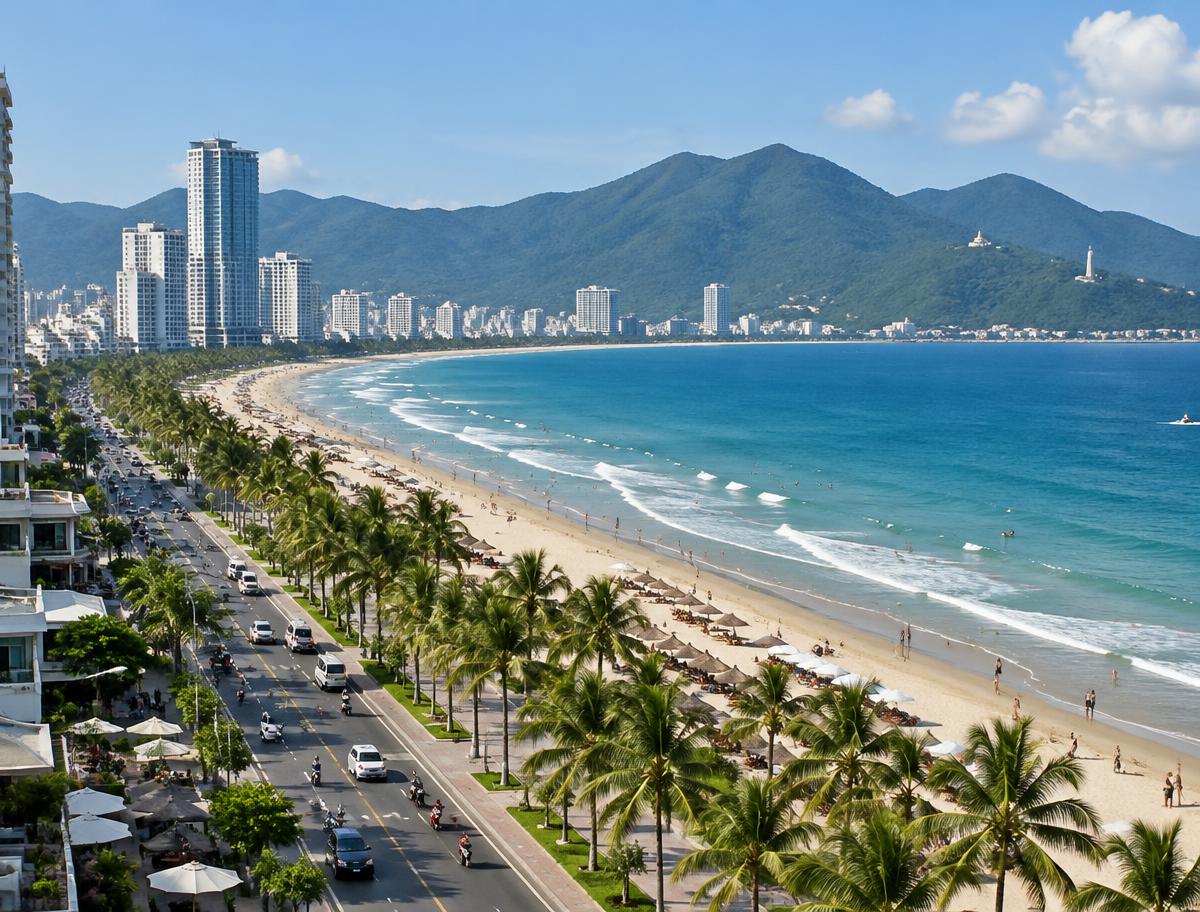
Chiang Mai is still one of the easiest places in Asia to build a comfortable life as a digital nomad over 50.
It combines relatively low living costs, good private healthcare, reliable internet, a huge choice of cafés and coworking spaces and an established international community.
But there is one very big catch: the annual smoke season.
For most people considering Chiang Mai, the real question isn’t whether the city is “good for digital nomads.” It is whether Chiang Mai works for the way you actually want to live.
Chiang Mai at a glance
| Chiang Mai | |
|---|---|
| Best for | Affordable long stays, remote work, community, healthcare |
| Comfortable monthly budget | Around 40,000–60,000 THB for one person |
| Typical modern 1-bed | Roughly 10,000–25,000 THB depending on area |
| Best areas without a scooter | Nimman, Old City, parts of Santitham |
| Healthcare | Very good private healthcare |
| Internet | Excellent |
| Coworking | Excellent |
| Walkability | Good in selected neighbourhoods, poor city-wide |
| Public transport | Limited |
| Best months | Roughly November–January |
| Biggest drawback | Smoke season |
| House sitting | Available, but not as plentiful as major European markets |
| Long-term potential | Excellent for the right person |
| 50+ Nomad verdict | One of Asia’s strongest bases, but not year-round for everyone |
Is Chiang Mai good for digital nomads over 50?
Yes. In fact, some of the things that make Chiang Mai less exciting to a 25-year-old backpacker can make it better at 50+.
Life is relatively easy.
You can get a modern apartment with a pool, have food delivered, use Grab instead of riding a scooter, work from excellent cafés or coworking spaces and access private hospitals with international patient services.
Bangkok Hospital Chiang Mai has 18 specialist centres and clinics and a 24-hour emergency department. Chiang Mai Ram also specifically caters to international patients and offers medical interpreters in several languages.
The bigger question is whether you can live with the heat, traffic and especially the air quality during smoke season.
What does it cost to live in Chiang Mai in 2026?
Ignore the websites claiming you can have a comfortable expat life in Chiang Mai for $500 a month.
You can live extremely cheaply here. That doesn't mean you will want to.
Recent 2026 cost guides consistently put a more realistic comfortable budget for a single remote worker at around 40,000–60,000 THB per month, depending heavily on housing, Western food, transport and lifestyle.
A realistic monthly budget
| Expense | Typical range |
|---|---|
| Modern 1-bedroom condo | 10,000–25,000 THB |
| Electricity, water, internet, phone | 1,500–3,500 THB |
| Food | 8,000–15,000+ THB |
| Grab / local transport | 2,000–4,000+ THB |
| Coworking | 0–6,000 THB |
| Gym / pool / activities | 1,000–3,000+ THB |
| Miscellaneous | 3,000–8,000+ THB |
A comfortable target of 40,000–60,000 THB gives you considerably more room than the ultra-budget numbers often quoted online.
If you want a larger apartment, frequent Western meals, private healthcare, regular travel and no need to watch every baht, budget more.
The 50+ Nomad reality
Your housing expectations matter enormously.
A 7,000 THB studio may technically be a perfectly decent apartment.
But many people over 50 looking for a longer-term base want a lift, comfortable bed, proper kitchen, good shower, washing machine, pool, gym, quiet building and enough space to work.
That changes the budget.
Best areas to live in Chiang Mai
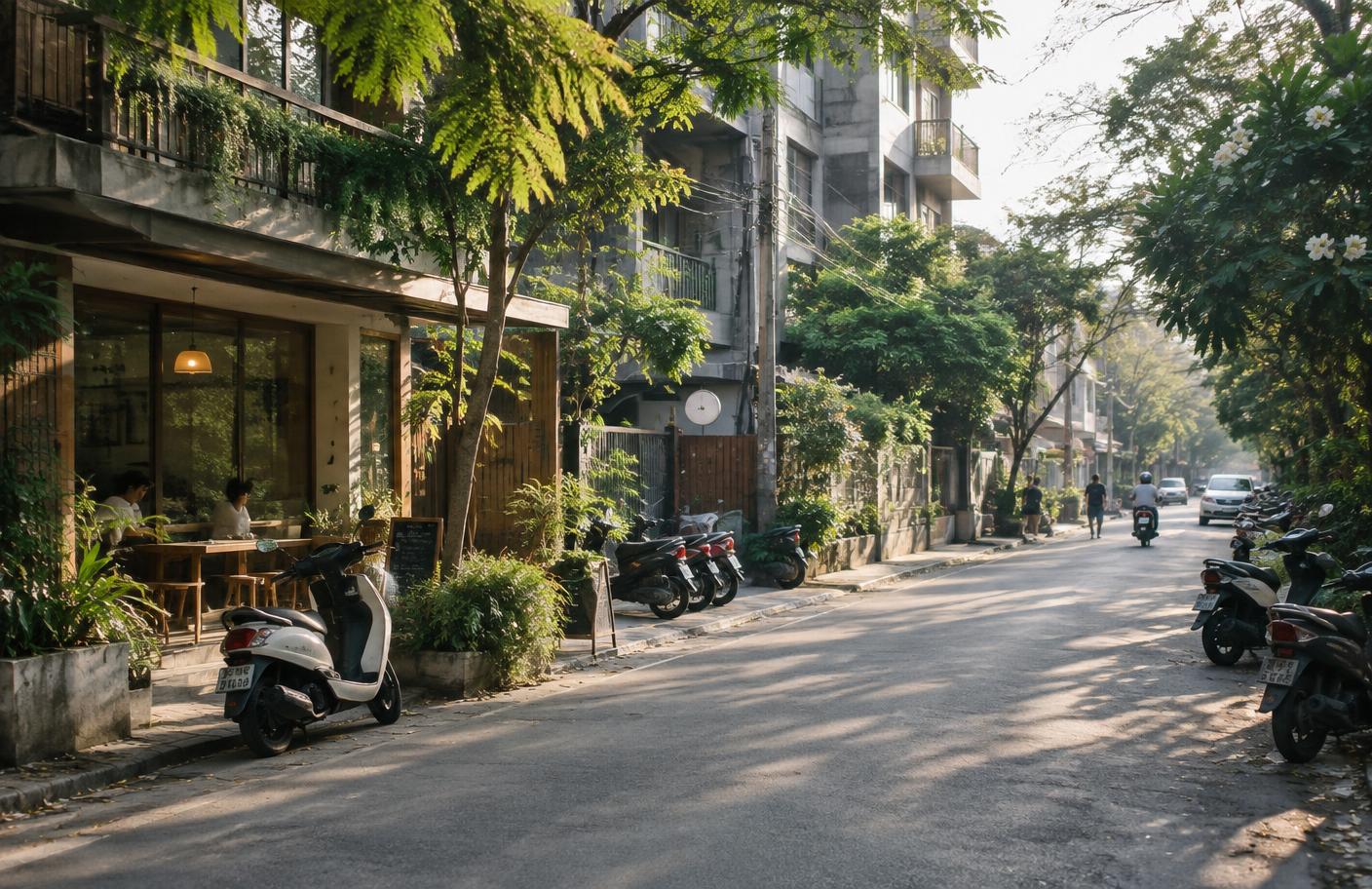
There is no single best neighbourhood. The right area depends mainly on whether you want to live without a scooter.
Nimman
Best for: First-time Chiang Mai nomads, walkability, cafés and convenience.
Nimman is the easiest place to land.
You have modern condos, Maya shopping centre, restaurants, cafés, gyms, coworking and almost everything you need within a relatively small area.
Current 2026 rental guides put modern one-bedroom condos broadly around 12,000–25,000+ THB per month, although both cheaper and much more expensive options exist.
The downside is that Nimman is more expensive, busier and more international than many other parts of Chiang Mai.
50+ Nomad take: Probably the easiest place to start if you don't want a scooter.
Santitham
Best for: Better value while staying close to Nimman.
Santitham sits between Nimman and the Old City and feels much more local.
Rent is generally lower, food is cheap and you're still close enough to reach Nimman easily.
Recent rental guides put one-bedroom options roughly around 5,000–14,000 THB, depending on the building and exact location.
50+ Nomad take: One of the best value areas if you know exactly where you're staying. Walkability varies a lot from street to street.
Old City
Best for: Walkability, culture and shorter stays.
Inside the moat you'll find temples, markets, restaurants, cafés and plenty of accommodation.
It's one of the few parts of Chiang Mai where you can genuinely build much of your day around walking.
Housing tends to be older than Nimman and there are fewer modern condo towers.
50+ Nomad take: Excellent if you want character and don't need a modern high-rise condo.
Riverside / Wat Ket
Best for: Quieter, more grown-up city living.
The areas around the Ping River can feel calmer and more residential while remaining close to central Chiang Mai.
You'll find larger apartments, restaurants and some attractive riverside properties.
50+ Nomad take: Worth looking at if Nimman feels too young or busy.
Hang Dong, Mae Rim and outer Chiang Mai
Best for: Houses, gardens, nature and space.
Move outside central Chiang Mai and your money buys considerably more.
This can be fantastic if you want a proper house rather than a condo.
But there is a catch.
You will normally need a car or scooter.
50+ Nomad take: Great for established Chiang Mai residents. Less convenient as your first base.
Can you live in Chiang Mai without a scooter?
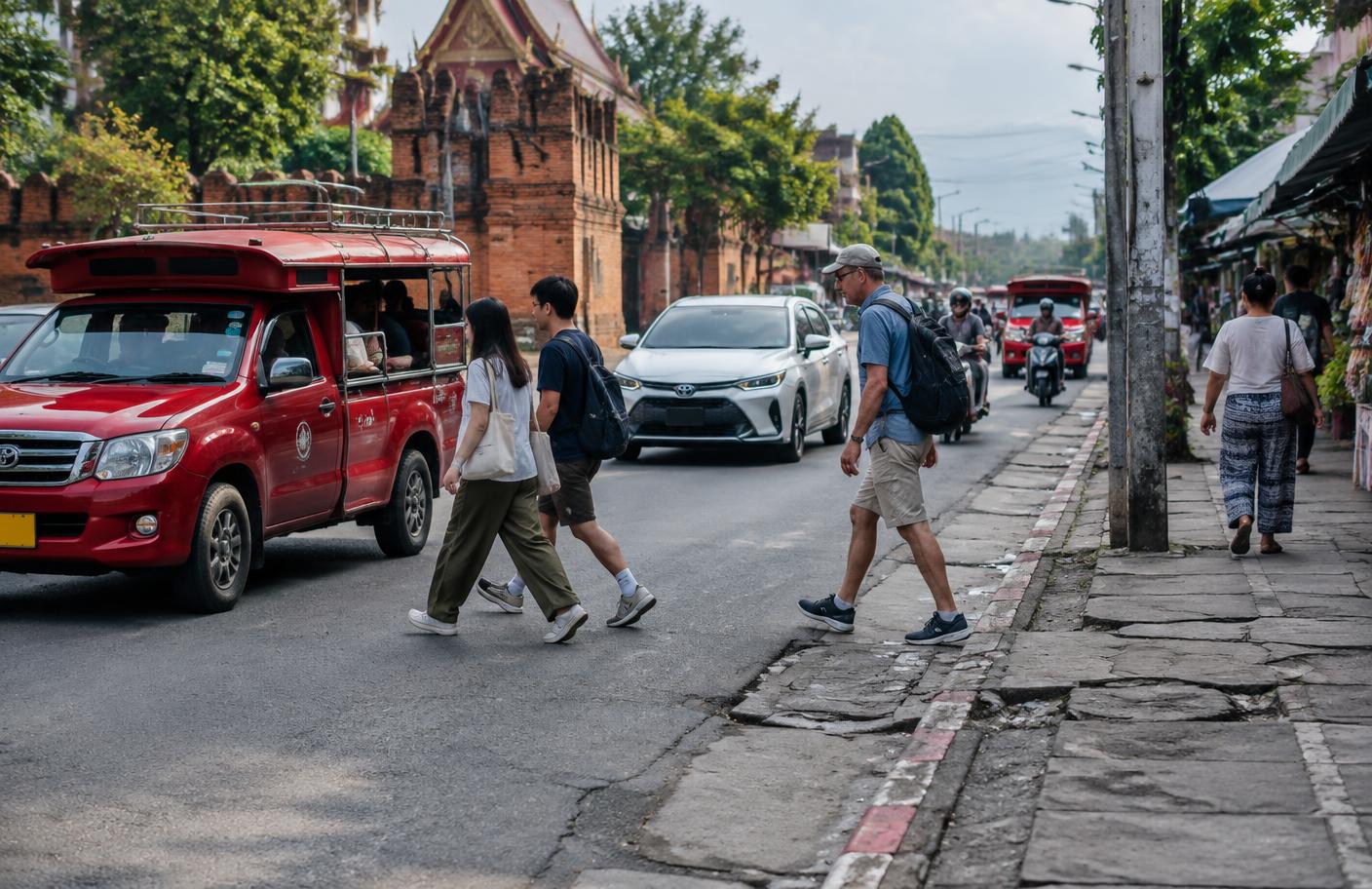
Yes, but choose your neighbourhood carefully.
This matters more than most Chiang Mai guides admit.
If you live centrally in Nimman, the Old City or the right part of Santitham, you can combine walking with Grab, Bolt and local transport.
Outside these areas, Chiang Mai becomes much harder without your own transport.
Even in the centre, pavements can be uneven, disappear completely or be blocked by parked vehicles.
So when a website gives Chiang Mai a simple “walkability score,” take it with a large pinch of salt.
If avoiding a scooter matters to you, choose the exact street before choosing the apartment.
Healthcare in Chiang Mai
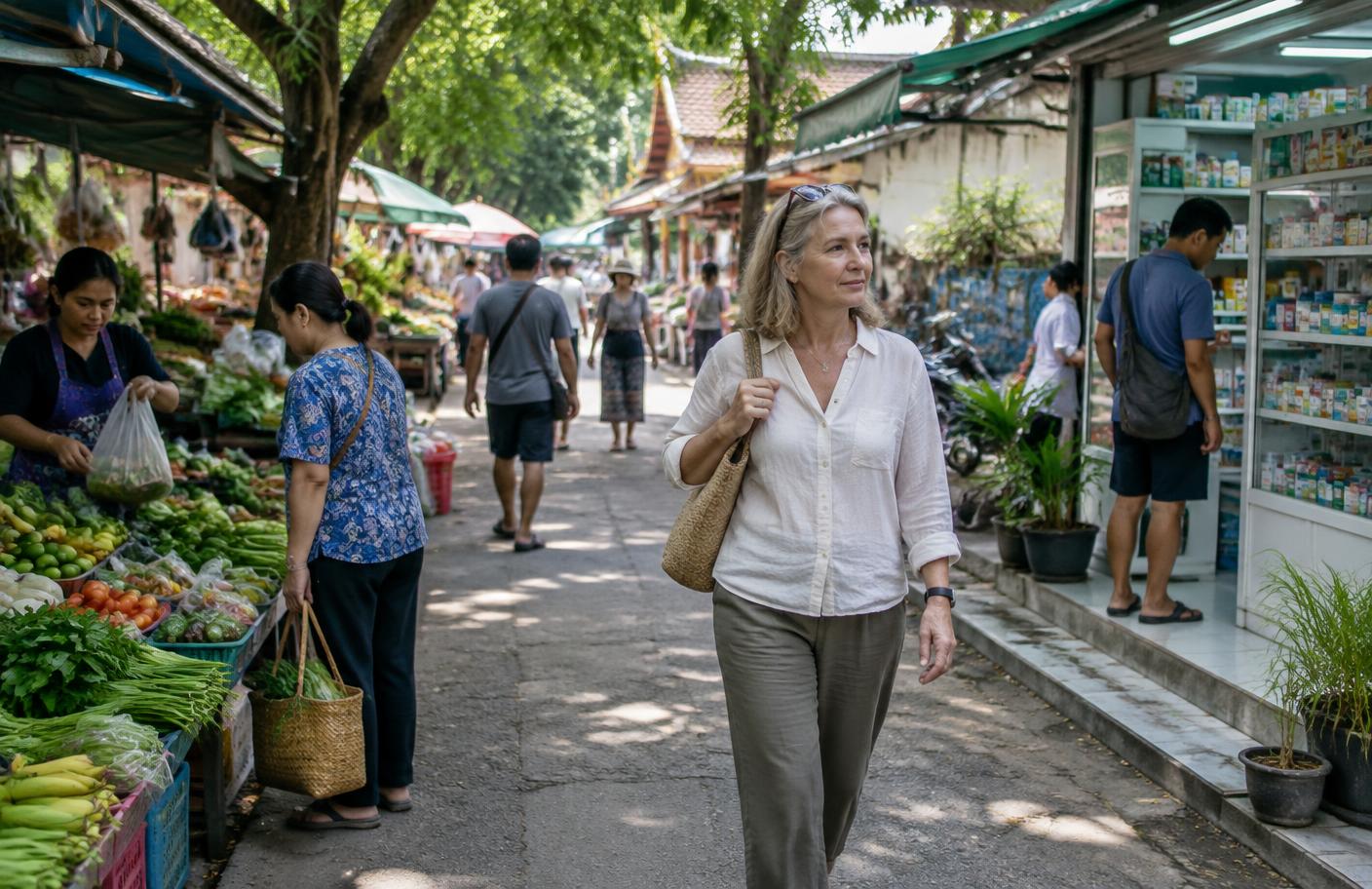
Healthcare is one of Chiang Mai's biggest advantages for people considering longer stays after 50.
The city has several major private hospitals used by foreign residents.
Bangkok Hospital Chiang Mai
A large private hospital with specialist clinics, international services and a 24-hour emergency and trauma centre. Its published facilities include orthopaedics, ENT, surgery, imaging and numerous specialist centres.
Chiang Mai Ram Hospital
Another long-established private hospital in central Chiang Mai. Chiang Mai Ram specifically promotes international patient services and medical interpretation, including English.
For routine appointments, diagnostics and many specialist needs, Chiang Mai is exceptionally well served for a city at this price point.
For highly complex or unusual treatment, Bangkok naturally offers a much larger medical ecosystem.
Before moving
Check:
- whether your insurance covers Thailand
- whether age changes your premiums
- exclusions for existing conditions
- outpatient versus inpatient coverage
- evacuation or repatriation cover
- medication availability in Thailand
Healthcare access and health insurance are two different questions.
Chiang Mai scores highly on the first.
The second depends entirely on your individual situation.
The Chiang Mai smoke season
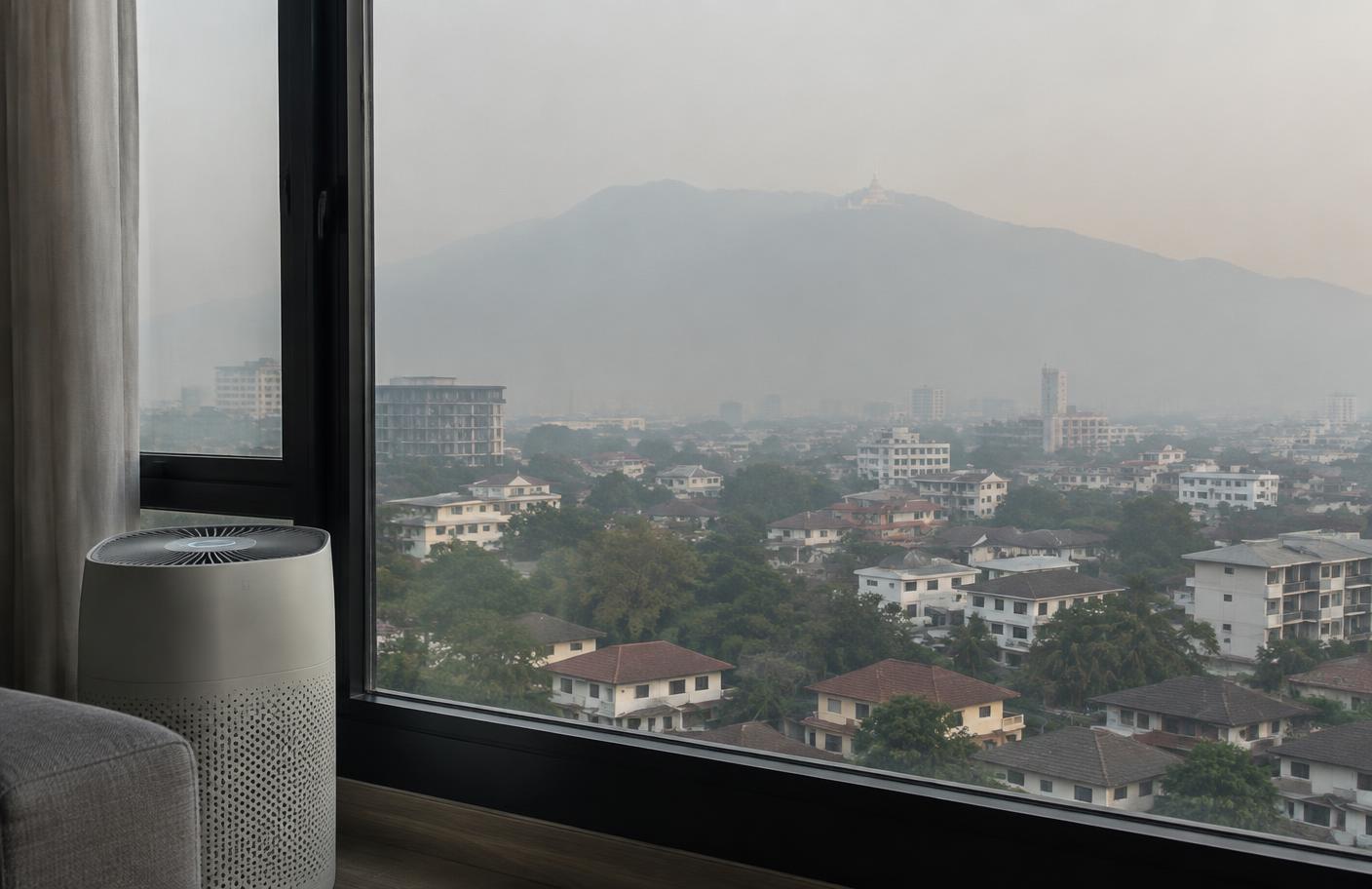
This is the thing you should understand before deciding you want to live here.
Northern Thailand experiences serious seasonal air pollution caused by a combination of agricultural burning, forest fires, weather conditions and regional pollution.
In 2026 Chiang Mai province imposed open-burning controls running from January 1 to May 31, illustrating how seriously authorities now treat the problem.
The worst period varies from year to year, but February through April is the period most long-term residents plan around.
For some people this means:
- HEPA air purifiers
- checking AQI daily
- exercising indoors
- wearing masks on bad days
For others it means leaving Chiang Mai completely.
Should smoke season stop you moving to Chiang Mai?
Not necessarily.
But I would not choose Chiang Mai as a permanent base without experiencing or seriously researching this period first.
A city can be fantastic for nine months and wrong for you for three.
That distinction matters.
When is the best time to live in Chiang Mai?
For many people, the sweet spot is approximately November through January.
The weather is cooler, humidity is lower and evenings can be surprisingly pleasant.
By March and April, temperatures rise and smoke can become the dominant issue.
The rainy season later in the year is much easier than many newcomers expect. Rain often arrives in intense bursts rather than ruining an entire day.
If I were planning Chiang Mai seasonally
November–January: Excellent
February: Depends on air quality
March–April: I would have an exit plan
May–October: Hot/wet but very liveable for many people
This is one reason Chiang Mai works particularly well as part of a multi-country nomadic year rather than necessarily as a 12-month base.
Working remotely in Chiang Mai
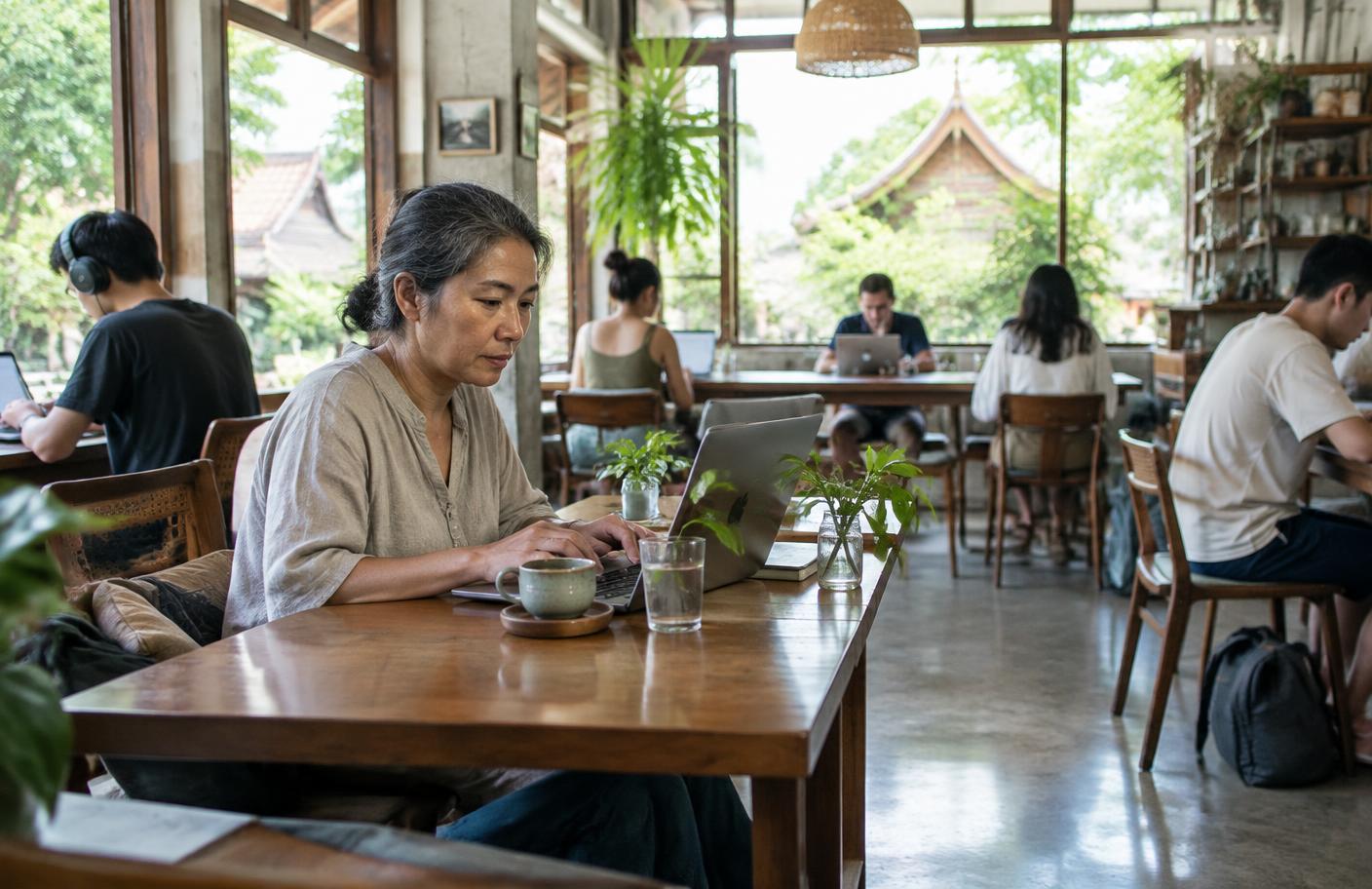
This is where Chiang Mai remains difficult to beat.
You can work from:
- dedicated coworking spaces
- cafés
- your condo
- coliving spaces
- malls and café-workspaces
Current established options include Punspace, Yellow, Alt Chiang Mai and others. Dedicated coworking facilities commonly offer proper desks, meeting rooms or call booths, high-speed internet and longer access for members.
The bigger advantage isn't any particular coworking space.
It's the density of options.
If one place doesn't suit you, another is normally minutes away.
Internet in Chiang Mai
Internet is generally excellent.
Modern condos commonly have fibre access and Chiang Mai's established coworking scene is built around people who spend their working lives online.
I would still keep mobile data as backup if your income depends on calls or reliable connectivity.
But internet quality itself is not a reason to hesitate about Chiang Mai.
Is there still a digital nomad community?
Yes.
Chiang Mai has been a remote-work hub for well over a decade, so you're not arriving somewhere trying to manufacture a nomad scene from scratch.
There are coworking communities, meetups, classes, Facebook groups, expat groups, hiking groups and endless informal communities.
The age mix is also broader than the stereotype suggests.
Chiang Mai attracts remote workers, business owners, retirees, long-term expats, couples and people who simply choose to spend part of each year here.
You do not need to spend your evenings drinking with 23-year-old backpackers unless that's somehow your retirement plan.
House sitting in Chiang Mai
Yes, house sitting exists in Chiang Mai, and this is something most digital-nomad city guides completely ignore.
TrustedHousesitters currently has Chiang Mai listings ranging from central condos to large homes outside the city, usually involving cats or dogs. Recent listings have appeared in central Chiang Mai, San Kamphaeng and surrounding rural areas, with sits ranging from a few nights to several weeks.
But Chiang Mai is not London.
You should not plan your entire accommodation strategy around finding continuous sits here.
Where house sitting gets interesting is as part of a broader plan.
A sit can:
- remove your accommodation cost for several weeks
- give you access to a much larger home
- let you test living outside the tourist/nomad areas
- bridge gaps between rentals
- make a longer Thailand stay considerably cheaper
One important warning
Look carefully at location.
A “Chiang Mai” house sit can actually be well outside central Chiang Mai.
Beautiful house. Lovely dogs. Absolutely useless location if you don't drive.
For house sitters over 50, I would check transport before almost anything else.
Visas for digital nomads in Thailand
Thailand's Destination Thailand Visa changed the equation considerably for remote workers.
The DTV is available for qualifying digital nomads, remote workers and freelancers.
It is a five-year multiple-entry visa and allows stays of up to 180 days per entry, with a possible extension of up to another 180 days per entry. Requirements vary by embassy, but official Thai embassy guidance includes financial evidence of at least 500,000 THB and evidence of qualifying remote work or professional activity.
If you're 50+, Thailand also has visa routes aimed at retirees, although those come with completely different conditions.
Visa requirements change, and different Thai embassies can request different supporting documents.
Always check the Thai e-Visa system or the embassy responsible for your application rather than relying on an old Facebook post.
Food and everyday life
One reason people stay in Chiang Mai is simply that daily life is easy.
Local Thai food remains inexpensive.
There are also excellent cafés, bakeries, vegetarian restaurants, supermarkets, imported groceries and Western restaurants when you've reached your personal limit for rice.
Food delivery is everywhere.
Laundry services are cheap.
Cleaning help is readily available.
Modern shopping centres give you air-conditioned access to supermarkets, pharmacies, restaurants, electronics and other everyday services.
None of this sounds terribly exciting.
That's the point.
A good long-term base should make ordinary Tuesday mornings easy.
Safety
Chiang Mai is generally considered an easy city for foreigners to navigate, including solo travellers.
The risk that deserves more attention is road safety.
Scooters are everywhere and many foreign visitors rent them despite having limited riding experience.
You do not need to ride one simply because everybody else seems to.
For many 50+ nomads, paying a few dollars for Grab is a perfectly sensible trade.
What Chiang Mai gets right after 50
Healthcare
You have proper private hospitals and specialist care without needing to fly to Bangkok for every medical issue.
Comfortable housing
Modern condos with pools, lifts, security and gyms are affordable compared with many Western cities.
Convenience
Food delivery, cleaning, laundry, taxis and everyday services remove a lot of friction.
Community
There are enough foreigners here that you don't have to rebuild your entire social life alone.
Work infrastructure
Coworking and cafés are mature rather than an afterthought.
Cost
You can buy a genuinely comfortable lifestyle without needing an enormous monthly budget.
What Chiang Mai gets wrong
Smoke season
There is no clever way of marketing around this. It is a serious drawback.
Walkability
Individual neighbourhoods are walkable. Chiang Mai as a whole is not.
Pavements
Often poor, inconsistent or nonexistent.
Traffic
Not Bangkok-level, but central Chiang Mai can still become congested.
Heat
If you hate hot weather, several months of the year may be challenging.
Distance
If your family and life are primarily in Europe or North America, Chiang Mai is a long way from home.
One month, three months or permanent base?
One month: Excellent
Chiang Mai is extremely easy to try.
Rent a serviced apartment or monthly condo, base yourself in Nimman or the Old City and see whether the lifestyle works.
Three months: Excellent
This is where Chiang Mai really shines.
You have enough time to develop routines, build a community and enjoy the lower costs without committing your entire life to Thailand.
Permanent base: Good, with conditions
Healthcare, cost and infrastructure make Chiang Mai a serious long-term option.
But before committing, answer three questions:
- Can I live with or work around smoke season?
- Am I comfortable with Thailand's visa situation?
- Can I build the social and practical life I actually want here?
If yes, Chiang Mai can be exceptionally good.
Who should choose Chiang Mai?
Chiang Mai is particularly strong if you:
- work remotely
- value affordability
- want good private healthcare nearby
- enjoy cafés and eating out
- want an established international community
- prefer a slower pace than Bangkok
- don't need a beach
- are happy using taxis instead of owning a car
- want a base in Asia for several months at a time
Who should probably look elsewhere?
Think carefully if:
- air pollution is a major health concern
- you need pristine pavements or excellent accessibility
- you want excellent public transport
- you hate hot weather
- you need to be near a beach
- you want to walk everywhere
- frequent direct flights to Europe or North America are essential
Chiang Mai alternatives
Da Nang
Consider Da Nang if you want a beach, wider roads and coastal living.
Bangkok
Choose Bangkok if healthcare depth, international flights, public transport and big-city life matter more than cost and tranquillity.
Kuala Lumpur
Consider KL if you want excellent transport, international connectivity and a highly developed modern city while remaining in Southeast Asia.
Penang
Consider Penang if food, healthcare and a more compact island lifestyle appeal to you.
Frequently asked questions
Is Chiang Mai still good for digital nomads in 2026?
Yes. Chiang Mai remains one of Asia's strongest remote-work bases because it combines affordable accommodation, reliable internet, coworking, cafés and a large international community. Smoke season remains its biggest drawback.
How much money do I need to live comfortably in Chiang Mai?
A realistic planning figure for one person is around 40,000–60,000 THB per month for a comfortable lifestyle, although it is possible to spend considerably less or more. Housing and food choices make the biggest difference.
Where should a digital nomad live in Chiang Mai?
Nimman is the easiest option for coworking, cafés, modern condos and life without a scooter. Santitham is cheaper and more local. The Old City works well for walkability and character.
Can I live in Chiang Mai without a scooter?
Yes, especially in Nimman, the Old City and selected parts of Santitham. Grab and other ride services make scooter-free living possible. Outer areas such as Hang Dong and Mae Rim are much harder without your own transport.
Is Chiang Mai good for people over 50?
Yes. Affordable modern housing, established expat communities and good private healthcare make Chiang Mai particularly attractive for older remote workers and long-term travellers. Air quality and transport are the main issues to consider.
What are the worst months for Chiang Mai air pollution?
The exact timing varies, but February through April is typically the period long-term residents are most concerned about. Burning restrictions in 2026 covered January through May.
Is healthcare good in Chiang Mai?
Yes. Chiang Mai has multiple private hospitals serving international patients, including Bangkok Hospital Chiang Mai and Chiang Mai Ram.
Is Chiang Mai cheaper than Bangkok?
Generally yes, particularly for rent. Chiang Mai is one reason Thailand remains attractive to people who want the infrastructure of a major expat destination without Bangkok prices.
Can you house sit in Chiang Mai?
Yes. House and pet sits appear in Chiang Mai and surrounding areas, although supply is smaller than in major house-sitting markets such as the UK. Location is particularly important because many houses outside central Chiang Mai require personal transport.
Is Chiang Mai a good place to retire?
For many people, yes. Healthcare, housing costs, services and the established international community make it attractive. Smoke season and visa requirements need to be considered before making it a permanent base.
The 50+ Nomad verdict
Chiang Mai is one of the best-value long-stay bases in Asia for digital nomads over 50.
The healthcare is good. The infrastructure works. Comfortable housing is affordable. You can build a social life. Remote work is easy.
What stops Chiang Mai from being an automatic recommendation is smoke season.
If you are prepared to leave for the worst part of it, Chiang Mai becomes much harder to beat.
Best for: 1–6 month stays, affordable comfortable living, remote workers and people who want an established international community.
Think twice if: air quality, perfect walkability or living without taxis are non-negotiable.
Our verdict: Excellent seasonal base. Potentially excellent permanent base for the right person.
Last researched: October 2026.
About this guide
50+ Nomad is built for people who aren't done travelling, working or trying something new just because they passed 50.
Nina has been a nomad for 17 years and house sitting for more than a decade. Our destination guides focus on the things generic nomad rankings often miss: healthcare, long-term comfort, transport, seasonality, house sitting and what living somewhere actually feels like.
Sources and methodology
This guide was researched using current information from the Thai Ministry of Foreign Affairs and Thai embassies, Chiang Mai provincial authorities, Bangkok Hospital Chiang Mai, Chiang Mai Ram Hospital, current 2026 rental and cost-of-living sources, coworking operators and house-sitting listings.
Prices are planning ranges rather than guarantees. Accommodation, visa rules, exchange rates and local services change, so figures should be rechecked before making a move.
Keep exploring
Coming soon
Chiang Mai vs Da Nang
Coming soonBest Cities in Asia for Digital Nomads Over 50
Coming soonBest Places to Live on $2,000/month
Coming soonHouse Sitting in Thailand
Coming soon